Head in the Clouds: Why Your CRM Should Be Too
Why CRM Cloud Services Are the Backbone of Every Modern Business
CRM cloud services are customer relationship management tools hosted online by a third-party provider and accessed through any web browser or mobile device — no servers, no IT headaches, no data locked in a spreadsheet.
Here’s what you need to know at a glance:
| Question | Quick Answer |
|---|---|
| What are they? | CRM software hosted online and delivered as SaaS |
| Who manages the tech? | The provider — not you |
| Can I access it anywhere? | Yes — browser, phone, tablet |
| Is it secure? | Yes — encryption, backups, and 24/7 monitoring |
| Who is it for? | Businesses of any size that want to manage customers smarter |
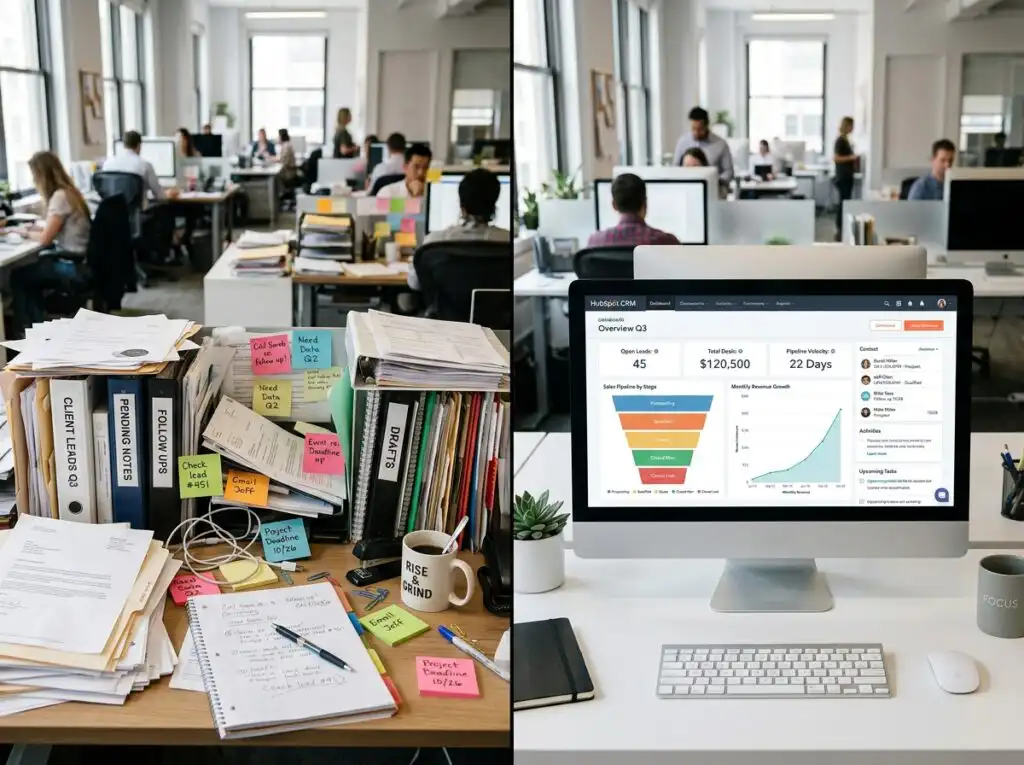
If you run a service business in Charleston, you already know the feeling. Leads come in from your website, a referral, maybe a Facebook ad. Then what? One ends up in an email thread. Another gets a sticky note. A third one just… disappears. That’s not a sales problem — that’s a systems problem.
Disconnected tools create disconnected experiences. And in a market where customers expect fast, personal responses, fragmented data is costing you deals.
Cloud CRM changes that. Instead of juggling five platforms that don’t talk to each other, you get one central place where every lead, conversation, and follow-up lives — updated in real time, accessible from anywhere, and working even when you’re not.
Leading cloud platforms now dominate the global market, trusted by hundreds of thousands of businesses worldwide. The shift to cloud-based systems isn’t a trend — it’s already the standard.
I’m Stephen Sovenyhazy, founder of CORE CONNECT in Charleston, SC, and over 20 years of building and scaling digital platforms across industries like construction, healthcare, and professional services has shown me how the right crm cloud services transform a leaky sales funnel into a predictable growth engine. In this guide, I’ll walk you through exactly what cloud CRM is, how it works, what to look for, and how to choose the right one for your business.
Quick crm cloud services definitions:
Understanding CRM Cloud Services: The Modern Operating System
In the “old days” of business technology, if you wanted a CRM, you had to buy a physical server, pay an IT person to install software on every computer in the office, and pray that the power didn’t go out. Today, crm cloud services have flipped that script.

A cloud-based CRM is delivered as Software as a Service (SaaS). This means the software is developed, hosted, and maintained by a provider on their secure servers. You simply log in via a web browser or an app. It is the difference between owning a DVD player and having a Netflix subscription—one requires maintenance and physical space, while the other is always ready, always updated, and available on any screen.
The primary shift here is from “managing software” to “managing relationships.” When your data is centralized in the cloud, it becomes a living, breathing asset. Every interaction a customer has with your brand—whether it’s an email to support or a click on a marketing campaign—is recorded instantly. This creates a “single source of truth” that prevents the chaos of duplicate entries and outdated contact info.
Research highlights the massive impact of this shift. For example, Nucleus Research found that no-code capabilities in cloud platforms can reduce the Total Cost of Ownership (TCO) by 37 percent. This is because you aren’t paying for expensive hardware or specialized developers to make simple changes.
| Feature | Cloud-Based CRM | On-Premise CRM |
|---|---|---|
| Upfront Cost | Low (Subscription-based) | High (Hardware & Licensing) |
| Maintenance | Handled by Provider | Handled by your IT team |
| Updates | Automatic & Instant | Manual & Time-consuming |
| Accessibility | Anywhere with Internet | Office-only (or complex VPN) |
| Scalability | Instant (Add seats as you grow) | Difficult (Requires more hardware) |
How crm cloud services work for your Charleston team
Whether your team is grabbing coffee on King Street or meeting a client in Mount Pleasant, they need access to data. Crm cloud services make this possible through remote access and mobile synchronization.
When a sales rep updates a deal status on their phone while leaving a job site in Summerville, that information is instantly visible to the office manager in North Charleston. There is no “syncing” required at the end of the day; the cloud handles it in real-time.
For the business owner, this means a massive reduction in IT burden. You don’t need to worry about server backups or security patches. The provider handles all the heavy lifting, including maintenance-free hardware and automatic updates. This allows you to focus on your website design and lead generation strategies rather than troubleshooting software bugs.
The role of AI and automation in modern crm cloud services
The most exciting evolution in crm cloud services is the arrival of “Agentic AI.” We aren’t just talking about basic chatbots anymore. Modern CRMs use AI agents that can actually perform tasks. They can summarize sales calls, write personalized follow-up emails, and even predict which leads are most likely to close based on historical data.
Predictive analytics and lead scoring allow our Charleston clients to stop guessing where to spend their time. If the AI identifies a lead from Daniel Island as “high intent” because they’ve visited your pricing page three times, your sales team gets an automated alert to call them immediately.
Automation takes over the repetitive, soul-crushing tasks. Instead of manually typing out “Thanks for reaching out” to every inquiry, the CRM triggers a personalized workflow the second a form is submitted. To dive deeper into how this works, you can learn more about low-code integration and automation and how it bridges the gap between your different business tools.
The Strategic Benefits of Moving to the Cloud
Moving your business operations to the cloud isn’t just a technical upgrade; it’s a strategic move that positions you for long-term growth.
For a business in the Lowcountry, scalability is key. You might start with a team of two, but as your search engine optimization efforts start bringing in more traffic, you need a system that grows with you. Cloud CRMs allow you to add new users or features with a single click.
Beyond growth, there is the matter of data accuracy. In a traditional setup, data silos are common—marketing has one list, sales has another, and accounting has a third. Crm cloud services provide a unified shared view, often called a “360-degree customer view.” This means when a customer calls, anyone in your company can see their entire history, from the first ad they clicked to the last invoice they paid.
Disaster recovery is another often-overlooked benefit. If a hurricane hits Charleston and your office equipment is damaged, your data is safe. Because it’s stored in global data centers with continuous backups, you can log in from a laptop in a different city and pick up exactly where you left off.
Enhancing collaboration through crm cloud services
Departmental silos are the enemy of efficiency. When your marketing team generates a lead, but the sales team doesn’t find out about it for three days, that lead is already cold.
Cloud CRMs facilitate real-time communication and seamless lead handoffs. You can tag a colleague in a customer record, assign tasks, and see a live feed of all activities. This is especially vital for remote work support. Whether your team is working from home in West Ashley or traveling for a conference, they have the same tools as if they were sitting at headquarters.
Many modern platforms also offer offline data capabilities. If a service technician is in a spotty cell area on Sullivan’s Island, they can still input data into the mobile app. The second they hit a stable connection, the CRM automatically syncs that data to the cloud, ensuring no information is lost.
Security and Integration: Protecting Your Local Business Assets
A common question we hear from business owners in Greenville or Columbia is: “Is my data really safe in the cloud?” The answer is almost always a resounding yes—and it’s usually much safer than it would be on a local office computer.
Leading crm cloud services providers invest millions in security measures that a small business simply couldn’t afford on its own. This includes:
- End-to-end encryption: Your data is scrambled while it’s being sent and while it’s sitting on the server.
- Access controls: You decide exactly who can see what. You can give your sales team access to leads but keep your financial data restricted to management.
- 24/7 monitoring: Large-scale security teams monitor the infrastructure for threats around the clock.
- Continuous backups: Your data is backed up automatically across multiple geographic locations.
Integration is the other half of the security and efficiency puzzle. Your CRM shouldn’t be an island. Through a robust API ecosystem, your cloud CRM can talk to your email, your calendar, your accounting software, and even your website visitor identification tools. This connectivity ensures that data flows securely between systems without manual exporting and importing, which is where most data breaches and errors occur.
Choosing the Right Platform for Your Growth Strategy
With so many options on the market, choosing the right crm cloud services can feel overwhelming. At CORE CONNECT, we advise our clients to look past the flashy features and focus on their specific growth strategy.
First, get stakeholder input. Talk to the people who will actually use the system every day. What are their pain points? Do they need better mobile access? Are they struggling with manual data entry?
Next, evaluate the pricing models and custom workflows. Some CRMs charge per user, while others charge based on the number of contacts. Ensure the platform is flexible enough to handle your unique business processes without forcing you to change how you work.
Consider the provider’s support track record and trial availability. You should always take a platform for a “test drive” before committing. Look for a system that offers a scalable foundation—something that works for you today but won’t be obsolete in two years. This is the philosophy behind our Reveal Marketing Hub, which serves as a unified operating system for businesses looking to escape the chaos of disconnected tools.
Implementation challenges are real, but they are manageable with the right migration strategy. Moving data from spreadsheets or an old system requires a clean-up phase to ensure you aren’t just moving “dirty data” into a shiny new platform.
Frequently Asked Questions about Cloud CRM
Is cloud CRM more secure than on-premise?
Yes. While “owning” your data on a local server feels secure, most small business servers lack the sophisticated encryption, specialized infrastructure, and 24/7 monitoring provided by cloud vendors. Cloud providers also handle automated backups across multiple global data centers, protecting you from local hardware failures or natural disasters.
How does a cloud CRM support remote work?
Cloud CRMs are built for the modern workforce. They offer web-based access and dedicated mobile apps that don’t require a slow or complex VPN. Because data syncs in real-time, your team stays aligned whether they are in the office, at home, or in the field.
What should I consider when evaluating pricing?
Don’t just look at the monthly “per-user” cost. Consider different feature tiers, potential integration costs, and implementation fees. Also, look at scalability—how much will your costs increase as your database grows? A platform that seems cheap today might become prohibitively expensive as you scale.
Conclusion
At CORE CONNECT, we believe that your business technology should be a source of clarity, not chaos. For businesses throughout Charleston, Mount Pleasant, and the wider South Carolina region, crm cloud services represent the most effective way to build a unified platform for growth.
By moving your customer data to the cloud, you gain ownership over your information, leverage the power of automation, and create a scalable foundation that delivers measurable ROI. You move away from the “leaky funnel” and toward a data-driven system where every lead is captured, every interaction is tracked, and every follow-up is automated.
Don’t let your business be held back by fragmented tools and disconnected data. It’s time to get your head in the clouds—because that’s where your customers already are.
Ready to stop chasing data and start closing deals?
Schedule a Free Consultation or Book a 30-Minute Discovery Call to see how a unified system can transform your business.
Phone: +1 (843) 800-2026
Email: hello@coreconnect.com