The Best Ways to Build an Automated Lead Follow-Up System
Why Most Businesses Lose Good Leads Before the First Conversation
Automated lead follow up is the process of using software to send timely, personalized messages to prospects across email, SMS, phone, and social channels — automatically, based on their behavior — so no lead ever falls through the cracks.
Here is how it works at a glance:
| Step | What Happens | How Automation Helps |
|---|---|---|
| 1. Lead captured | Form fill, ad click, content download | Instantly logged in CRM |
| 2. First response | Welcome message sent | Delivered in seconds, not hours |
| 3. Follow-up sequence | Multi-touch messages over days/weeks | Runs automatically on a schedule |
| 4. Behavior triggers | Lead opens email, visits pricing page | Triggers next relevant message |
| 5. Human handoff | Lead scores high enough to close | Sales rep notified to step in |
The core idea is simple: respond fast, follow up consistently, and let the system do the heavy lifting.
Think about the last time a potential customer reached out to your business. Did someone follow up within five minutes? Research shows companies that respond to leads within that five-minute window are 100 times more likely to connect with a prospect compared to those who wait just 30 minutes. Yet for most small business owners, that kind of speed is nearly impossible to achieve manually — especially when you’re juggling a full team, active projects, and a phone that never stops buzzing.
The reality is that most businesses don’t lose leads because their product or service isn’t good enough. They lose leads because no one followed up — or the follow-up came too late, was too generic, or simply got buried in a rep’s to-do list. Manual follow-up is slow, inconsistent, and impossible to scale. That’s exactly the problem automated lead follow-up solves.
I’m Stephen Sovenyhazy, founder of CORE CONNECT, and over 20 years of building marketing and automation systems for businesses across Charleston and beyond, I’ve seen how a well-designed automated lead follow up workflow can transform a leaky sales funnel into a reliable, revenue-generating engine. In this guide, I’ll walk you through exactly how to build one — step by step.
Why Automated Lead Follow-Up is Essential for Modern Sales
In the business environment of Charleston, from the tech hubs of Daniel Island to the bustling tourism corridors of downtown, “speed-to-lead” isn’t just a buzzword—it’s the difference between a closed deal and a lost opportunity. When a prospect reaches out, they are at the peak of their interest. Every minute that passes without a response allows that interest to decay.

An automated lead follow up system ensures that your business is always the first to respond. According to the Lead Response Management study, you are 100 times more likely to connect with a lead if you reach out within five minutes versus 30 minutes. Automation removes the friction of human error and the limitations of office hours. While your team is sleeping or out on a site visit in Summerville, your system is working 24/7, acknowledging inquiries and keeping the conversation moving.
Furthermore, the medium matters. Research indicates that 90% of text messages are read within 3 minutes of being received. By integrating SMS into your automated workflows, you bypass crowded inboxes and meet your customers exactly where they are. For businesses looking to bridge the gap between initial contact and a booked consultation, our marketing automation services provide the framework to make this happen seamlessly.
Solving the Persistence Gap in Charleston Small Businesses
One of the biggest silent killers of ROI for local businesses is the “persistence gap.” Most sales reps or business owners follow up once or twice and then stop, assuming the lead isn’t interested. However, industry data shows that 80% of sales require five follow-ups after the initial meeting to reach a conversion.
Without automation, maintaining that level of persistence is exhausting. Leads “leak” out of your funnel because they weren’t nurtured long enough to build trust. An automated system enforces a consistent cadence, ensuring that every lead receives the necessary number of touches—whether that’s five, seven, or twelve—without a single manual task on your plate. This consistency prevents lead decay and significantly increases your overall sales velocity.
Scaling Personalization with AI SDR Technology
A common fear among business owners in the Lowcountry is that automation feels “robotic.” Modern technology has moved far beyond generic templates. Research by McKinsey on AI in sales shows that data-driven teams using generative AI are 1.7 times more likely to increase market share.
AI-powered Sales Development Representatives (SDRs) can now interpret buyer context, such as a lead’s industry or specific pain points mentioned in a form, to craft messages that feel deeply personal. This allows you to scale your outreach without losing the human touch that Charleston clients expect. You can tailor your messaging based on the buyer’s journey stage, ensuring the content is always relevant and helpful.
Core Components of an Effective Automated Lead Follow-Up System
To build a system that actually converts, you need more than just an email tool. You need a unified digital ecosystem where all your tools talk to each other.
The foundation of this system is the Reveal Marketing Hub, our all-in-one operating system that replaces fragmented tools. When your website, CRM, and communication channels are unified, you gain a “single source of truth” for every prospect. Learn about Reveal Marketing Hub to see how we simplify this architecture for small businesses.
Multi-Channel Engagement Strategies
Modern buyers don’t live in a single channel. McKinsey research highlights that B2B buyers use ten channels during their journey. Your automated lead follow up should reflect this reality by combining:
- Email: For detailed information and long-term nurturing.
- SMS: For urgent updates, reminders, and quick questions.
- Voice/Voicemail Drop: To provide a personal touch at scale.
- Social (LinkedIn): To build professional rapport and stay top-of-mind.
By varying your channels, you increase the likelihood of catching the prospect where they are most comfortable engaging.
Seamless CRM and Tech Stack Integration
Automation only works if the data is accurate. Your follow-up system must integrate natively with your CRM to ensure that every interaction—every open, click, and reply—is logged in real-time. This prevents “awkward” automation, such as sending a “Why haven’t I heard from you?” email to someone who just booked a call.
For those looking to dive deeper into the technical setup, there are many automation tutorials for workflows available that demonstrate how to connect these dots. At CORE CONNECT, we focus on Revenue Operations (RevOps) to ensure your tech stack isn’t just a collection of apps, but a streamlined engine for growth.
| Feature | Traditional Sequences | AI Agents (SDRs) |
|---|---|---|
| Logic | Linear (Day 1, Day 3) | Behavioral & Adaptive |
| Content | Pre-written Templates | Generative & Contextual |
| Response | One-way Broadcast | Two-way Conversational |
| Goal | Clicks/Opens | Qualified Meetings |
Step-by-Step: Building Your Automated Lead Follow-Up Workflow
Building your system starts with a visual map. You need to know exactly what triggers the first message and what the ultimate goal of the sequence is.
Defining Goals and Triggers for Your Automated Lead Follow-Up
Every sequence needs a “Why.” Are you trying to get a demo booked, a quote approved, or a consultation scheduled? Use SMART goals (Specific, Measurable, Achievable, Relevant, Time-bound) to define success.
Triggers are the “If” that starts the “Then.” Common triggers include:
- Form Fills: A prospect requests a whitepaper or a quote.
- Intent Signals: Our website visitor identification technology identifies an anonymous high-value company browsing your pricing page.
- Content Downloads: Someone grabs your “Guide to Charleston Real Estate.”
- Inactivity: A lead who was warm has gone cold for 30 days.
Crafting High-Conversion Follow-Up Sequences
The content of your messages should always provide value first. Don’t just ask “Are you ready to buy?” Instead, offer a case study, a helpful tip relevant to their industry, or an answer to a common objection.
Implementing marketing automation with a value-first approach can result in a 451% increase in qualified leads. End your messages with a low-friction “interest question” rather than a hard sell to encourage a reply.
Measuring Success and Optimizing Your Automated Lead Follow-Up
You cannot manage what you do not measure. Once your system is live, you need to monitor the data to see where leads are engaging and where they are dropping off.
Tracking Essential Performance Metrics
Focus on the KPIs that drive revenue, not just vanity metrics. Key indicators include:
- Response Time: How many seconds does it take for the first message to go out?
- Conversion Velocity: How quickly does a lead move from “New” to “Qualified”?
- Pipeline Accuracy: Is the automation correctly tagging leads based on their interest level?
- ROI: Are the meetings booked through automation resulting in closed deals?
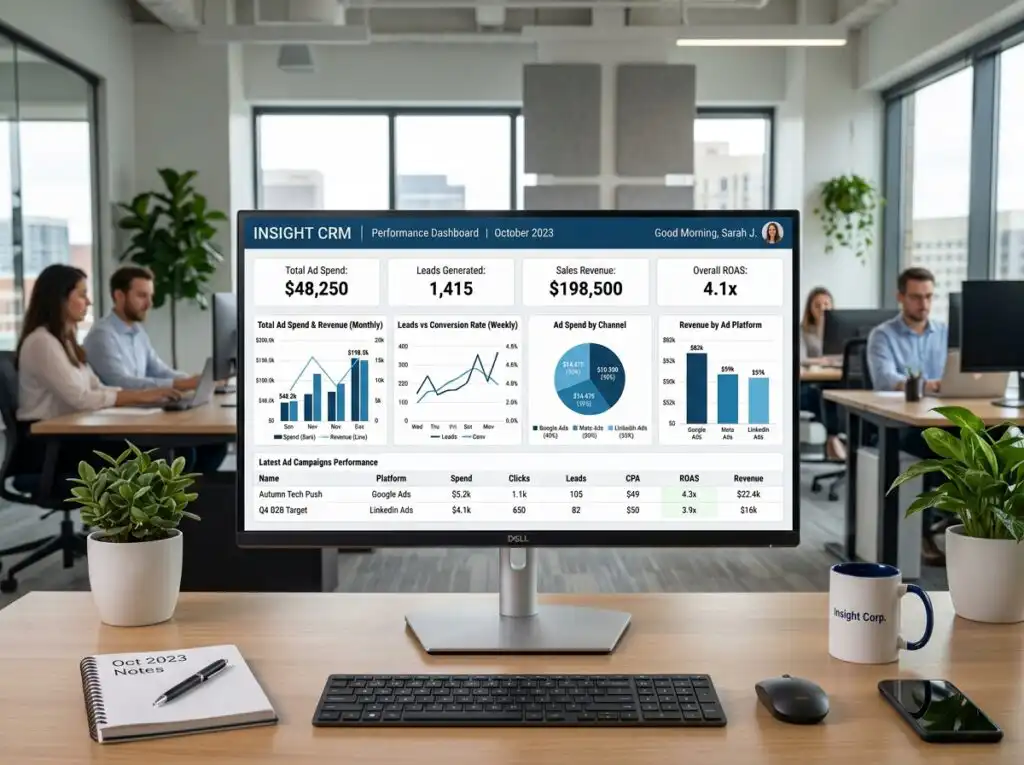
Visualizing this data in a lead generation dashboard helps your team stay aligned on performance. For businesses looking to boost these numbers through better organic visibility, check out our SEO services.
Continuous Improvement Through A/B Testing
The first version of your sequence is just a starting point. Use A/B testing to refine your approach. Test different subject lines to improve open rates, or experiment with the timing of your SMS messages. McKinsey research on personalization suggests that the value of getting this right is multiplying; teams that iterate based on data see significantly higher market share growth.
Real-World Use Cases Across Charleston Industries
Automation isn’t a one-size-fits-all solution. It looks different depending on your industry and local market needs.
Automating High-Volume Insurance and Real Estate Leads
In the Charleston real estate and insurance markets, competition is fierce. When a lead requests a quote or inquires about a property in Mount Pleasant, they are likely doing the same with three other agents.
- Immediate Response: Automated SMS and email go out instantly, confirming receipt and providing a link to schedule a call.
- Localized Touch: Using localized area codes (843) for automated calls or texts builds immediate trust and increases answer rates.
- Smart Segmentation: Tagging leads based on the neighborhood they are interested in (e.g., West Ashley vs. Sullivan’s Island) allows for highly relevant property updates.
Nurturing Long-Term B2B SaaS and Professional Service Leads
For SaaS companies in North Charleston or professional services firms in downtown, the sales cycle is often longer.
- Dormant Lead Nurture: If a lead doesn’t convert after 90 days, they are automatically enrolled in an educational drip sequence that shares industry insights once a month.
- Case Study Delivery: When a lead visits a specific service page, the system triggers an email with a relevant case study from a similar Charleston business.
- Human Handoff: Once a lead interacts with three educational emails, the system alerts a sales rep to make a personal, high-value outreach.
Frequently Asked Questions about Automated Lead Follow-Up
How do we maintain a human touch while automating?
The key is “Human-Centric Automation.” Use personalization tokens for names and company details, but go further by using behavioral triggers. If a lead clicks a link about “Commercial SEO,” your next automated message should be about that specific topic. This shows you are paying attention to their needs. Always ensure there is a clear path for a lead to reach a real person when they are ready.
Do CRM systems automatically follow up with leads?
Many CRMs like HubSpot or Salesforce have built-in workflow engines, but they are often limited in their multi-channel capabilities or require expensive add-ons. Basic CRMs might handle a simple email drip, but true automated lead follow up—integrating AI agents, SMS, and cross-platform behavior tracking—usually requires a more robust system like our Reveal Marketing Hub.
What are the legal compliance requirements for automation?
Compliance is non-negotiable. You must adhere to TCPA and text message laws, which include getting explicit consent before texting and providing an easy way to opt-out. For email, ensure you are compliant with CAN-SPAM and GDPR by including your physical address and a functional unsubscribe link. Our systems at CORE CONNECT have these protections built-in to keep your business safe.
Conclusion
At CORE CONNECT, we believe that small business owners in Charleston deserve the same powerful tools as enterprise-level companies. By moving away from fragmented, “leaky” funnels and implementing a unified system like the Reveal Marketing Hub, you take ownership of your data and your growth.
Automated lead follow up isn’t about replacing your team—it’s about amplifying them. It’s about ensuring that the hard work you put into SEO and web design actually results in revenue because no lead is ever ignored. Whether you are in Greenville, Columbia, or right here in the Lowcountry, a scalable, data-driven foundation is the key to long-term success. Explore more info about our integrated services to see how we can build your digital ecosystem.
Ready to stop losing leads to the chaos of manual follow-up?
Schedule a Free Digital Audit or Book a 30-Minute Discovery Call to see how a unified system can transform your business.
Phone: +1 (843) 800-2026
Email: hello@coreconnect.com