Stop Stressing and Start Managing with Fully Managed Services
Are Fragmented Tools Quietly Killing Your Business Growth?
Fully managed services are end-to-end outsourced technology solutions where a provider handles everything — setup, monitoring, security, updates, and support — so you don’t have to.
Here’s what that means in practice:
| What You Get | What You No Longer Worry About |
|---|---|
| 24/7 proactive monitoring | Chasing vendors when things break |
| Automated updates and patching | Managing software yourself |
| Security and compliance oversight | Navigating complex regulations alone |
| Single point of accountability | Juggling 5–10 disconnected contracts |
| Scalable infrastructure | Outgrowing your tools at the worst moment |
If you’ve ever found yourself paying for a stack of tools that don’t talk to each other — a website here, a CRM there, maybe some email software on the side — you already know the frustration. Leads fall through the cracks. Nobody knows which marketing effort is actually working. And when something breaks, you spend more time figuring out who to call than actually fixing the problem.
This is the reality for a lot of business owners right now. Technology was supposed to make things simpler. For many, it’s done the opposite.
The good news? That’s exactly the problem fully managed services are designed to solve.
I’m Stephen Sovenyhazy, founder of CORE CONNECT, and over 20 years of building and scaling digital platforms across industries like healthcare, home services, and professional services, I’ve seen how fully managed services can transform a fragmented, stressful digital setup into a system that actually works for you. In the sections ahead, I’ll break down everything you need to know to make a confident decision.
Fully managed services terms at a glance:
What Are Fully Managed Services?
At its heart, a fully managed service is a strategic partnership where you outsource the responsibility for maintaining, and anticipating the need for, a range of processes and functions. Unlike traditional outsourcing where you might hire someone to perform a single task, a fully managed model means the provider takes “ownership” of the outcome.
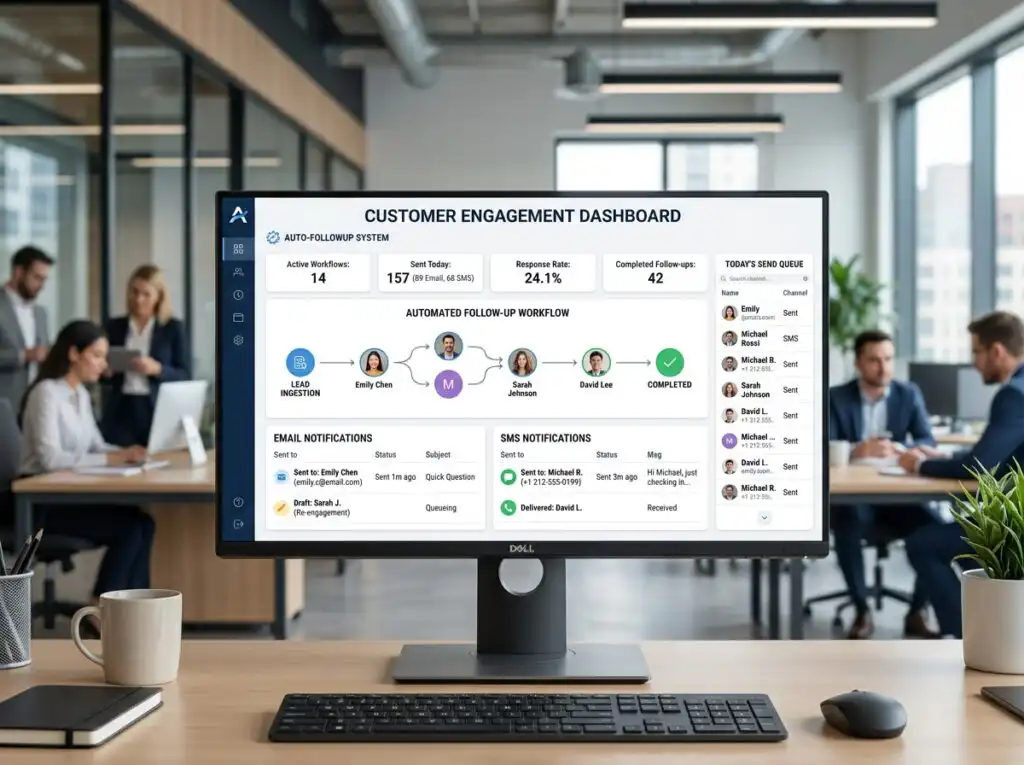
Imagine having a streamlined digital dashboard where every lead, every website interaction, and every automated follow-up is handled under one roof. That is the essence of operational excellence. Instead of you acting as the middleman between different software vendors, the managed service provider (MSP) handles the heavy lifting. This includes 24/7 monitoring to catch issues before they impact your customers and ensuring your entire digital ecosystem remains healthy and secure.
As discussed in the IT community on Reddit, the true definition of managed services has evolved from simply “renting an IT guy” to externalizing entire business processes. It’s about moving from a reactive “hope it doesn’t break” mindset to a proactive “built to grow” strategy.
Fully managed services vs. Traditional IT Support
The biggest difference here is proactivity. Traditional IT support is often “break-fix.” Your server goes down in North Charleston, you call a technician, they bill you by the hour to fix it, and everyone hopes it doesn’t happen again. This model actually incentivizes the provider when things break—the more problems you have, the more they charge.
Fully managed services flip this on its head. Because we operate on a predictable model, our goal is to ensure things never break in the first place. We focus on proactive maintenance, automated patching, and constant optimization. This eliminates “technical debt”—that pile of outdated software and messy workarounds that slows your business down. By ensuring high system uptime, we help you focus on your customers in Mount Pleasant or West Ashley rather than your computer screen. You can see more about our integrated services to understand how we blend technical health with marketing growth.
The difference between co-managed and Fully managed services
Sometimes a business has a small internal IT team but they are completely overwhelmed. This is where co-managed services come in. In this model, the MSP partners with your existing staff to fill skill gaps or handle routine tasks like AWS Managed Services operational best practices, allowing your internal team to focus on high-level projects.
However, for many small to medium-sized businesses in the Lowcountry, fully managed services are the preferred route. This is full outsourcing where the provider acts as your entire digital department. It’s a complete resource allocation strategy that removes the need for you to hire, train, and retain expensive specialized staff.
Managed vs. Fully Managed Services: The Operational Gap
Many providers use the term “managed” loosely, but there is a massive operational gap between “managed” and “fully managed services.”
In a standard managed model, the provider might give you the tools (like a SaaS platform), but you are still responsible for the daily “feeding and watering.” For example, in EDI (Electronic Data Interchange), a “managed” provider might set up the connection, but if a message fails, you have to figure out why and contact your partner to fix it.
In a fully managed service, the provider handles the partner onboarding, constant message monitoring, and—most importantly—proactive error handling. If a data transfer fails at 2:00 AM, the provider spots it and fixes it before you even open your laptop the next morning. You escape the “middleman frustration” and enjoy a fully managed infrastructure that works while you sleep.
Why Fully Managed Services are the Future of B2B Integration
The business world is moving toward total automation. With new e-invoicing mandates and the need for API coexistence, trying to manage B2B integration in-house is becoming a liability. Fully managed services provide the scalability needed to grow without the growing pains.
When you learn about the Reveal Marketing Hub, you see how we replace fragmented tools with a single operating system. This isn’t just about “IT”; it’s about B2B automation that drives revenue. Research shows that moving to a fully managed cloud model can lead to a 60% reduction in Total Cost of Ownership (TCO) compared to self-managed setups. You aren’t just buying software; you’re buying a scalable foundation that you own.
Maximizing ROI with Fully managed services
The financial argument for fully managed services is compelling. On average, businesses see 10-15% annual operational cost savings. More importantly, they save time. It’s common for businesses to save 20+ hours weekly by offloading manual data entry, software updates, and troubleshooting.
For a business owner in Summerville or Greenville, SC, that’s half a work week returned to you. Whether it’s through throughput savings in your data processing or reducing infrastructure spend by only paying for what you use, the ROI is measurable. When combined with strategic SEO for Charleston businesses, these savings can be reinvested into growth-focused marketing rather than just keeping the lights on.
Serverless vs. Fully managed services
There is often confusion between “serverless” and “fully managed.”
- Serverless means you have zero visibility into the underlying machines. You just upload your code, and the provider handles the rest. You pay strictly per use.
- Fully managed services offer a “best of both worlds” approach. You get the automation of patching and scaling, but you often maintain more control over the environment and runtime.
Whether you are using an Elasticsearch Service managed cloud experience or a custom-built automation suite, the goal is the same: removing the burden of server management so you can focus on the application and the user experience.
Security, Compliance, and Risk Mitigation
Security is no longer optional. A single data breach can destroy a local reputation built over decades. Fully managed services bake security into the foundation.
We implement a “Zero Trust” access model and data encryption both at rest and in transit. This includes:
- 150+ managed guardrails to prevent unauthorized access.
- Continuous threat detection using advanced tools like Amazon GuardDuty.
- Compliance alignment with standards like SOC2, HIPAA, and NIST.
- Disaster recovery plans that ensure your data is backed up across multiple fault-tolerant data centers.
By leveraging AWS database security and management, we ensure that your customer data is protected by the same level of security used by global enterprises, but tailored for your Charleston-based business.
Choosing the Right Partner for Your Digital Ecosystem
Not all MSPs are created equal. Some are “rent-seeking middlemen” who just put their logo on someone else’s software. To find a true partner, look for:
- Transparency: Do they provide clear reporting on what they are actually doing?
- RMM Technology: Do they use Remote Monitoring and Management tools to fix things before you notice?
- Predictable Billing: You should have a flat, monthly fee with no “surprise” hourly charges.
- Local Expertise: A partner who understands the Charleston, SC market and can offer custom website design that speaks to your local audience.
The implementation process should be a smooth transition, not a chaotic overhaul. Look for a Service Level Agreement (SLA) that guarantees uptime and response times, ensuring they are as committed to your success as you are.
Frequently Asked Questions about Fully Managed Services
Which industries benefit most from fully managed models?
While any business can benefit, those with complex data needs or high compliance requirements see the most value. This includes healthcare (HIPAA), real estate, professional services, and tourism. If you need to identify anonymous visitors with our technology to fuel your sales funnel, a fully managed model ensures that data flows accurately and securely.
How do these services handle rapid business scaling?
We use “autoscaling clusters.” If your business gets a sudden surge of traffic—perhaps during a peak tourism season in Sullivan’s Island or a major promotion—the system automatically provisions more resources to handle the load. When the traffic drops, the system scales back down to save you money. This is the beauty of cloud-native infrastructure; it grows with you.
What are real-world examples of fully managed success?
Large enterprises provide great blueprints. For instance, companies like BigCommerce and Citizens Bank have saved millions of dollars annually by moving to fully managed data streaming. They’ve seen up to 97% automation in their operational tasks. For a small business, this translates to the ability to compete with much larger rivals because your “digital department” is just as efficient as theirs. You can read more about our mission in Charleston to see how we bring this enterprise-level power to local businesses.
Conclusion
The days of struggling with disconnected tools and “leaky” sales funnels are over. By embracing fully managed services, you regain ownership of your digital assets, leverage automation to save time, and build a foundation for long-term growth.
At CORE CONNECT, we don’t just provide a service; we build an integrated digital ecosystem tailored for the Charleston business community. We replace the chaos of fragmented software with the clarity of the Reveal Marketing Hub, giving you the control and measurable ROI you deserve.
Stop being the “IT person” for your own company. Let us handle the technology so you can handle your business.
Ready to see the gaps in your current digital setup?
Schedule a Free Digital Audit
Contact Information:
Phone: +1 (843) 800-2026
Email: hello@coreconnect.com