

SEO (search engine optimization) earns your pages a ranking and a click in search results. GEO (generative engine optimization) earns your business a mention or citation inside AI-generated answers from tools like Google AI Overviews, ChatGPT, Gemini and Perplexity. You need both, because in 2026 they share the same foundation and now sit on the same results page. Our research found AI Overviews on 61% of Google results, and commercial searches triggering them nearly doubled in nine months.
SEO vs. GEO: The Key Differences
| SEO | GEO | |
|---|---|---|
| Where you show up | Ranked links in Google, Bing and maps | AI answers in Google AI Overviews, ChatGPT, Gemini, Perplexity |
| What you’re trying to win | A ranking and a click | A citation or a mention by name |
| How people search | Short keyword phrases | Longer, conversational questions |
| What it rewards | Relevance, technical health, links, user experience | Clear, quotable answers, verifiable facts, authority and third-party corroboration |
| How you measure it | Rankings, impressions, clicks, conversions | Citation rate, brand mentions, share of AI answers |
Why GEO Suddenly Matters
Two years ago, AI Overviews appeared on about 6% of Google results. By August 2026 they appeared on 61%. And they are no longer limited to “what is” questions. AI Overview trigger rates rose across every type of search:
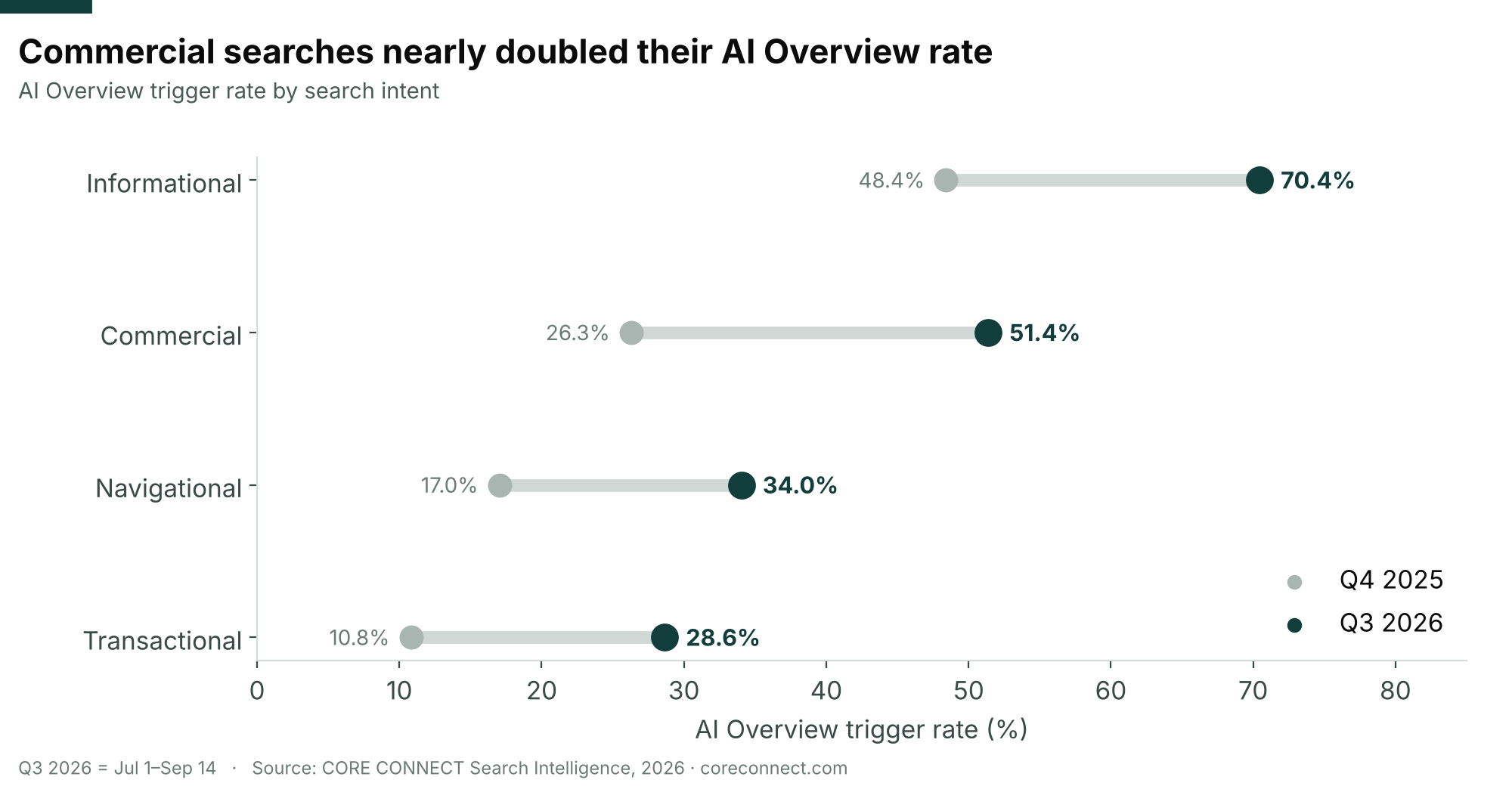
Commercial searches, the “best,” “top-rated” and “compare” queries buyers run before they choose, went from 26.30% to 51.35%. That is the moment a customer is deciding who to hire, and half the time an AI is now framing the choice.
Where SEO and GEO Overlap
The overlap is bigger than the new acronym suggests. Our analysis found that referring domains, a classic SEO signal, correlate with citations in both Google AI Overviews (Spearman ρ = 0.406) and ChatGPT (0.377). Pages cited in AI Overviews overwhelmingly already rank well. In practice, strong SEO is the price of admission for GEO.
Shared work that pays off in both:
- Fast, technically clean, indexable pages
- Pages that answer real questions directly, in the words buyers use
- A consistent business record across your site, Google Business Profile and directories
- Links and mentions from relevant, trusted sources
Where SEO and GEO Split
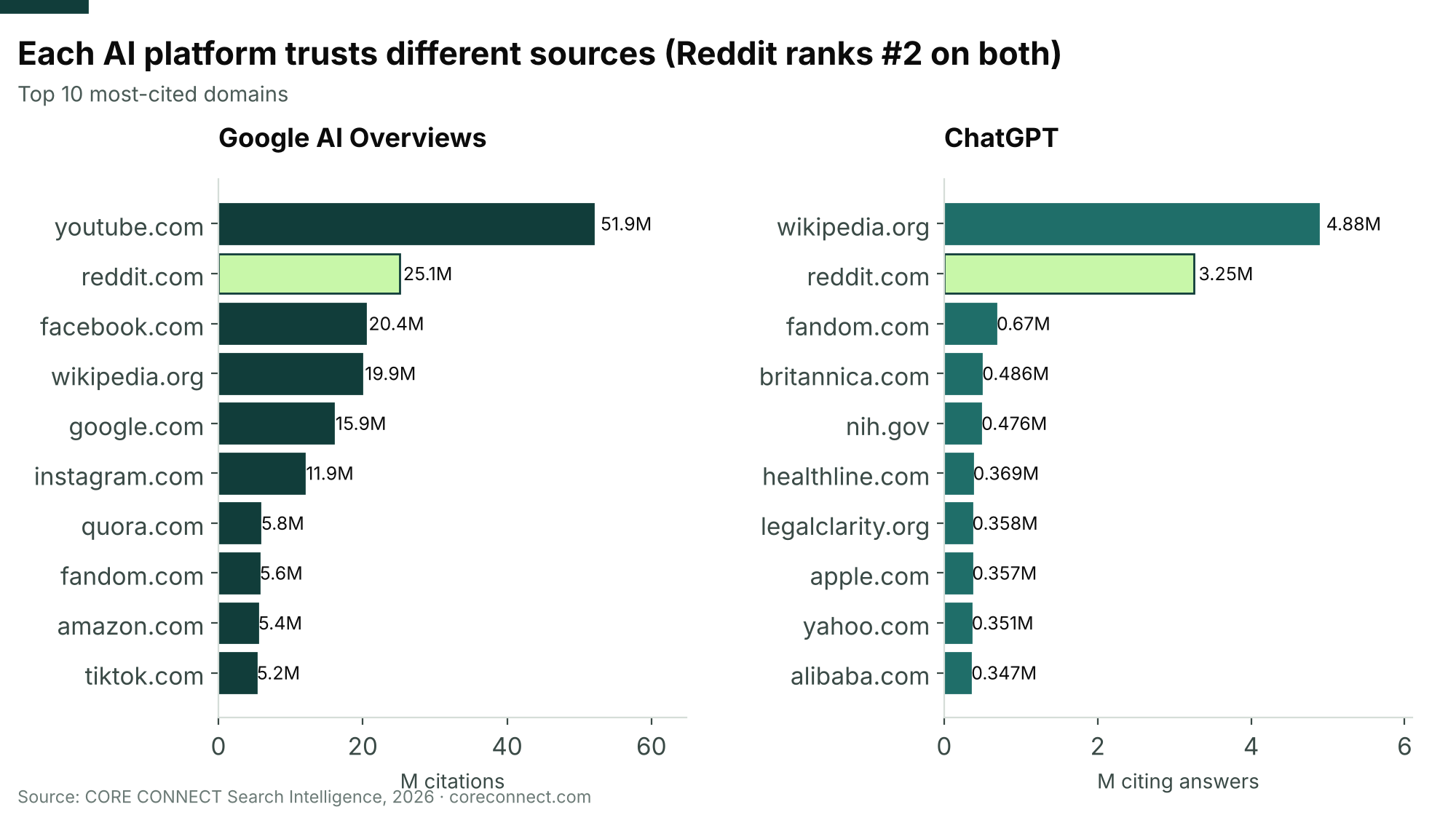
The platforms don’t trust the same sources. Google AI Overviews cite video, social and community sites heavily: YouTube is the most-cited domain, followed by Reddit, Facebook and Wikipedia. ChatGPT leans toward reference sites and publishers, led by Wikipedia and Reddit. YouTube ranks first in AI Overviews but 19th in ChatGPT.
So GEO adds work that traditional SEO often skipped:
- Write to be quoted. A direct answer at the top of every section, comparison tables, and FAQ blocks.
- Show up off your site. Short YouTube answers, an active Google Business Profile, reviews, local press and genuine participation in relevant communities.
- Track each platform separately. Sites cited by AI for hard keywords had 5.6 times more referring domains than those cited for easy ones, and winning one platform doesn’t guarantee the other.
Do You Need SEO, GEO or Both?
Both, in that order. GEO without SEO rarely works, because AI systems mostly draw on pages that already rank. SEO without GEO leaves you ranking under an AI answer that takes 42–45% of the clicks when it appears. The practical plan is one program measured on two scoreboards: classic visibility and AI visibility.
That is how our AI SEO service is built. For the data behind it, read how to rank in Google AI Overviews and download our full report, or see what falling click-through rates really mean.
Frequently Asked Questions
What is the difference between SEO and GEO?
SEO optimizes your website to rank and earn clicks in search results. GEO optimizes your content and brand to be cited or named inside AI-generated answers, such as Google AI Overviews and ChatGPT. SEO wins a click; GEO wins a mention.
Is GEO replacing SEO?
No. GEO builds on SEO. AI systems mostly cite pages that already rank, and the same authority signals, like referring domains, correlate with both rankings and AI citations. Think of GEO as an extra scoreboard, not a replacement.
What is the difference between GEO and AEO?
They overlap heavily. AEO (answer engine optimization) usually refers to structuring content so it can be used as a direct answer, including voice assistants and featured answers. GEO focuses specifically on generative AI tools. In practice, the work is largely the same: clear answers, verifiable facts and authority.
How do I measure GEO results?
Track whether your business is cited or named in Google AI Overviews and ChatGPT for a fixed list of priority questions each month, alongside Search Console impressions, Google Business Profile actions and conversions. Rankings alone won’t show it.