
Why Basic Metrics Won’t Tell You What’s Actually Happening
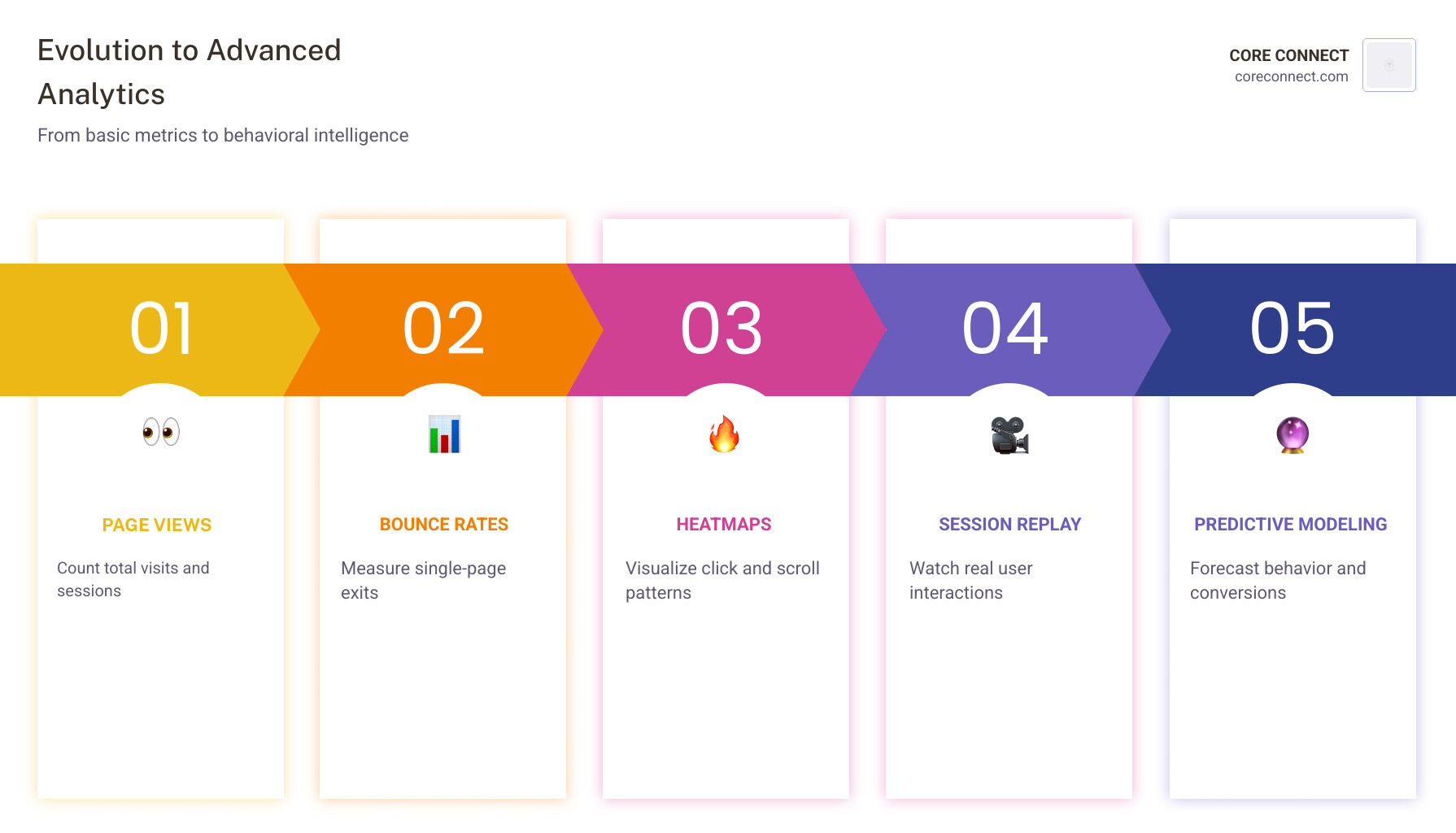
Advanced website analytics goes beyond basic metrics like page views and bounce rates to reveal why visitors behave the way they do on your site. Instead of just counting traffic, advanced analytics tracks user flows, identifies friction points, captures micro-conversions, and predicts future behavior—giving you the context needed to make decisions that actually improve conversion rates.
Key differences between basic and advanced analytics:
| Basic Analytics | Advanced Analytics |
|---|---|
| Page views, sessions, bounce rate | User flows, event tracking, session replay |
| What happened | Why it happened |
| Traffic volume | Behavioral patterns and intent |
| Retroactive reporting | Predictive modeling and real-time insights |
| Surface-level data | Contextual intelligence with qualitative + quantitative data |
Here’s the reality most businesses face: you’re getting traffic, maybe even decent traffic. But conversions feel unpredictable. You can see that people are leaving, but not why they’re leaving. You’re making decisions based on incomplete information.
The research backs this up. According to industry benchmarks from Gartner, companies that implement advanced analytics see measurable results—174% year-over-year growth, 217% ROI over three years, and a 27% increase in conversions just from understanding behavior patterns. One organization cut reporting time in half while reducing user drop-offs by 9%. These aren’t vanity metrics. They’re business outcomes driven by understanding the full picture of visitor behavior.
Traditional web analytics tell you what’s happening on your site. Advanced analytics tell you what to do about it. The difference is the context layer—heatmaps showing where people actually click, session replays revealing frustration points, funnel analysis pinpointing exactly where prospects abandon your conversion path, and event tracking capturing the micro-interactions that predict whether someone will buy.
I’m Stephen Sovenyhazy, and I’ve spent over 20 years building platforms that turn website data into revenue opportunities through Advanced website analytics implementation and visitor behavior analysis. At CORE CONNECT, we help businesses move beyond surface-level reporting to track, understand, and act on the behavioral patterns that actually drive growth.
Why Businesses Must Evolve to Advanced Website Analytics
In the competitive landscape of Charleston and Mount Pleasant, simply knowing how many people landed on your homepage isn’t enough to stay ahead. We’ve seen too many local businesses rely on “vanity metrics”—those shiny numbers like total page views that look great in a board meeting but don’t actually tell you if your marketing is working.
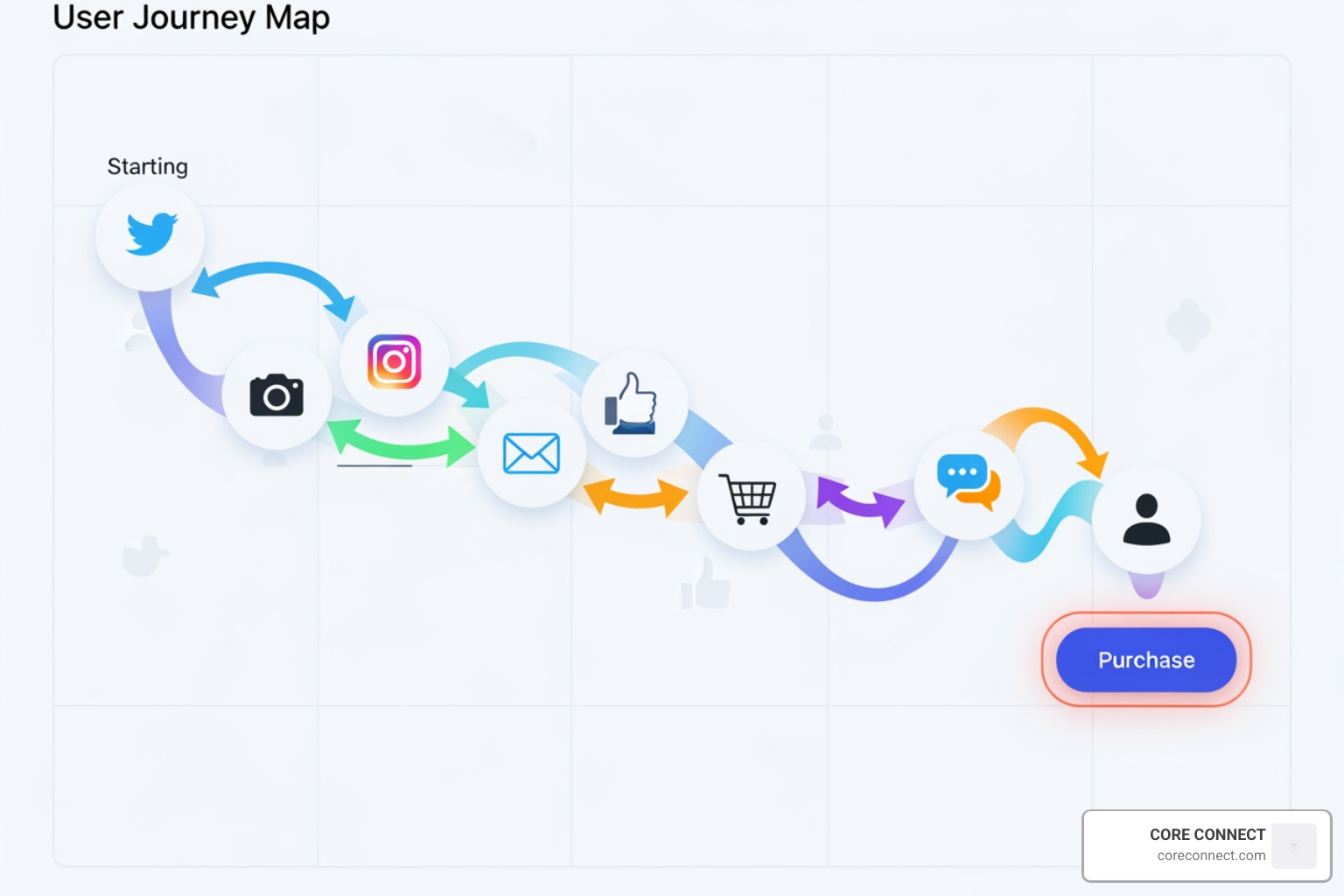
Traditional analytics often leave you with an incomplete picture. You might see a high bounce rate on your service page and assume the content is bad, but without advanced insights, you won’t know if the user left because of a broken button, a slow load time, or because they found exactly what they needed and called you immediately. This is why Why Traditional Analytics Tools Fall Short is a conversation we have with almost every new partner.
Moving to Advanced website analytics means shifting from “what happened” to “why it happened.” When you understand the why, you can stop guessing and start growing. Research indicates that businesses embracing these advanced frameworks experience a staggering 174% YOY growth and a 217% ROI over a three-year period. In the Lowcountry, that kind of growth is the difference between being a local favorite and a regional powerhouse.
The ROI of Advanced Website Analytics
Let’s talk numbers, because at the end of the day, your analytics should be a profit center, not a cost center. When we implement advanced systems, we typically see a time to payback of just 6 months. That is incredibly fast for a digital infrastructure investment.
The efficiency gains are equally impressive. By automating data collection and using AI-driven insights, businesses have seen a 50% cut in reporting time. Imagine what your marketing team could do with half their week back! Instead of manually pulling spreadsheets, they could be brainstorming the next big campaign for your Mount Pleasant storefront.
Furthermore, behavior insights lead to a 27% increase in conversions. By identifying exactly where users get frustrated, you can smooth out the path to purchase. We’ve even seen a 40% boost in activation rates simply by optimizing the onboarding flow based on real user data. If you’re ready to master these skills, you might consider an Advanced Analytics Certification with CORE CONNECT to empower your internal team.
Moving Beyond Surface-Level Data
Surface-level data tells you that someone visited your site from a Facebook ad. Advanced data tells you that a high-intent lead from Charleston clicked your ad, spent three minutes reading your “About Us” page, hovered over the “Get a Quote” button three times, but ultimately left because the form had too many fields.
This level of contextual insight changes your decision-making process. You aren’t just “fixing the website”; you are removing specific barriers to entry.
| Metric Category | Traditional Metric | Advanced Intelligence Metric |
|---|---|---|
| Engagement | Average Time on Page | Scroll Depth & Interaction Rate |
| Conversion | Goal Completions | Micro-Conversion Path Analysis |
| Retention | Returning Visitors | Cohort Analysis & Churn Prediction |
| Technical | Page Load Time | Rage Clicks & Dead Click Tracking |
Core Techniques for Analyzing Visitor Behavior Patterns
To track visitors like a pro, you need a toolkit that goes deeper than standard session tracking. We use a combination of quantitative data (the numbers) and qualitative insights (the behavior) to build a 360-degree view of your audience.
One of the most powerful ways to see your site through your customers’ eyes is through heatmaps. Heatmaps visualize where users click, move their mice, and scroll. If you see a “hot” area on an unclickable image, you know your users expect a link there. If your main CTA is in a “cold” zone, it’s time for a redesign.
However, heatmaps are just the beginning. Understanding the difference between Visitor Identification vs Standard Analytics Tools is crucial. Standard tools tell you an anonymous user visited; advanced visitor identification tells you who that user is, often identifying the specific company or individual browsing your site in real-time.
Identifying Drop-off Points with Funnel Analysis
Funnel analysis is the bread and butter of conversion rate optimization (CRO). By mapping out the steps a user takes from landing to conversion, we can see exactly where the “leaks” are.
We’ve found that by meticulously analyzing these funnels, businesses can achieve a 9% reduction in user drop-offs. That might sound small, but if you have 10,000 visitors, that’s 900 more people staying in your sales process. This technique helps identify “friction points”—those moments where a user gets confused or annoyed and decides to leave. If you want to see this in action for your own site, you can Start for free with behavioral insights and begin plugging those leaks today.
Granular Event Tracking and Advanced Website Analytics
Event tracking allows us to monitor specific interactions that don’t involve a new page loading. This includes:
- Video plays and pause points.
- File downloads (like a PDF brochure for a Lowcountry real estate listing).
- Form field interactions (seeing which specific field causes people to quit).
- Clicks on outbound links.
Beyond just tracking what happened, we use predictive metrics to forecast what will happen. By applying machine learning to historical data, we can predict user churn or the likelihood of a purchase. This allows us to proactively reach out to a lead before they’ve even finished their coffee. Interested in how this works? Check out our guide on Predictive Modeling with CORE CONNECT.
Implementing a Pro-Level Tracking Framework
Setting up Advanced website analytics isn’t just about dropping a piece of code on your site and calling it a day. It requires a strategic framework that aligns with your specific business goals. Whether you are a law firm in downtown Charleston or an e-commerce brand in Mount Pleasant, your tracking needs to be purposeful.
First, we identify your primary goals. Is it lead generation? Direct sales? Brand awareness? Once the goals are set, we implement data governance to ensure the data you’re collecting is clean, accurate, and compliant with privacy regulations. A common starting point for many of our partners is learning How to Connect Search Console with CORE CONNECT Analytics to bridge the gap between what people search for and what they do on your site.
Qualitative vs Quantitative Data Integration
The real magic happens when you combine the “what” (quantitative) with the “why” (qualitative).
- Quantitative: “15% of users are dropping off at the checkout page.”
- Qualitative: “Session replays show that the ‘Apply Coupon’ box is overlapping the ‘Place Order’ button on mobile devices.”
By using session replays, you can literally watch a video of a user’s journey. It’s not creepy—it’s enlightening! You’ll see exactly where they get stuck, where they “rage click” (clicking a button repeatedly because it’s not responding), and what content they actually stop to read. For a deeper dive into this, read our Website Visitor Identification: The Complete Guide.
Overcoming Challenges in Advanced Website Analytics
Adopting advanced techniques isn’t without its hurdles. Many businesses struggle with “data silos”—where the marketing team has one set of numbers, sales has another, and the business owner is left in the dark. Our Reveal Marketing Hub is designed to shatter these silos by unifying all your data into one clear dashboard.
Technical debt and privacy compliance (like GDPR or CCPA) are also major concerns. Modern platforms now use privacy-safe modeling to provide insights even when users opt out of traditional tracking. This ensures you still get the intelligence you need without compromising user trust.
We’ve seen that overcoming these technical hurdles can lead to a 40% activation boost for new users. If you’re feeling overwhelmed by the technical side, you can Get started with AI analytics and let our automated systems do the heavy lifting for you.
Future Trends in Modern Data Tracking
The world of website analytics is moving fast, fueled by breakthroughs in AI and connectivity. We are moving away from static reports and toward “living” data that talks back to us.
One of the most exciting trends is the rise of AI Agents. These aren’t just chatbots; they are autonomous systems that sense, analyze, and optimize your website 24/7. Imagine an AI that notices a sudden drop in conversions on your Mount Pleasant landing page and automatically tweaks the headline to see if it improves performance. That’s the future we’re building.
Other emerging trends include:
- Privacy-Safe Modeling: Using machine learning to fill in the gaps in customer journeys while respecting user privacy.
- IoT Integration: As more devices (from smartwatches to home appliances) connect to the web, advanced analytics will track user behavior across a massive ecosystem of touchpoints.
- 5G Technology: Faster speeds mean we can capture and process high-fidelity behavioral data (like real-time 4K session replays) without any lag on the user’s end.
- Machine Learning Predictions: Moving from “last month’s report” to “next month’s forecast” with high accuracy.
Frequently Asked Questions
What is the difference between basic and advanced analytics?
Basic analytics focuses on volume and surface-level actions (page views, bounce rate, sessions). Advanced analytics focuses on behavior, intent, and the “why” behind those actions. It uses tools like heatmaps, session replays, and predictive modeling to provide a contextual understanding of the user journey.
How does AI improve visitor tracking?
AI automates the analysis of massive datasets that would be impossible for a human to process. It can identify patterns in real-time, predict which visitors are likely to churn or purchase, and even suggest optimizations to improve the user experience. It turns data from a “record of the past” into a “map for the future.”
How can businesses identify specific user drop-off points?
By using funnel analysis, we can visualize the step-by-step journey of a user. When we see a significant percentage of users leaving at a specific step (e.g., between adding to cart and entering shipping info), we can use qualitative tools like session replays and heatmaps to investigate exactly what is causing the friction at that specific moment.
Conclusion
At CORE CONNECT, we believe that data should empower you, not confuse you. Whether you’re looking to dominate the Charleston SEO rankings or simply want to know why your latest marketing campaign isn’t sticking, the answer lies in your visitor behavior patterns.
Our Reveal Marketing Hub was built specifically to give South Carolina businesses the same level of intelligence used by global giants. By combining real-time visitor identification with Advanced website analytics, we turn your website from a digital brochure into a high-performance sales engine.
If you’re ready to stop guessing and start growing with clarity and control, it’s time to look under the hood. Experience the power of real-time intelligence and see exactly who is visiting your site and what they want.
Ready to see who’s really on your site?
Explore Reveal Marketing Hub