
Why Small Business Social Media Matters More Than Ever
Small business social media is no longer optional—it’s the digital front door where over 5.24 billion potential customers find, evaluate, and choose who to buy from. Here’s what you need to master:
Quick Answer: Essential Elements of Small Business Social Media
- Clear Strategy – Define measurable goals and identify your target audience
- Right Platforms – Focus on 2-3 platforms where your customers actually spend time
- Consistent Content – Post regularly with a mix of educational, promotional, and engaging content
- Active Engagement – Respond to comments, messages, and mentions in real-time
- Performance Tracking – Monitor metrics that tie directly to business outcomes, not vanity numbers
The reality is simple: 55% of consumers learn about new brands on social media, and 67% of users have made purchases through social platforms. Yet most small businesses struggle to turn scrolling into sales. They post inconsistently, chase trends that don’t fit their brand, or invest in platforms where their customers don’t exist.
The gap between “being on social media” and using it strategically is where growth happens—or gets lost.
If you’re already spending on ads and SEO but results feel scattered, social media might be the missing link. It’s not about going viral. It’s about building trust, staying visible, and creating a consistent path from awareness to action. When done right, social media doesn’t just support your marketing—it amplifies everything else you’re doing.
I’m Stephen Sovenyhazy, founder of CORE CONNECT, and over the past 20 years I’ve helped businesses across industries build small business social media strategies that actually drive leads and revenue—not just likes. This guide will show you how to do the same, step by step.
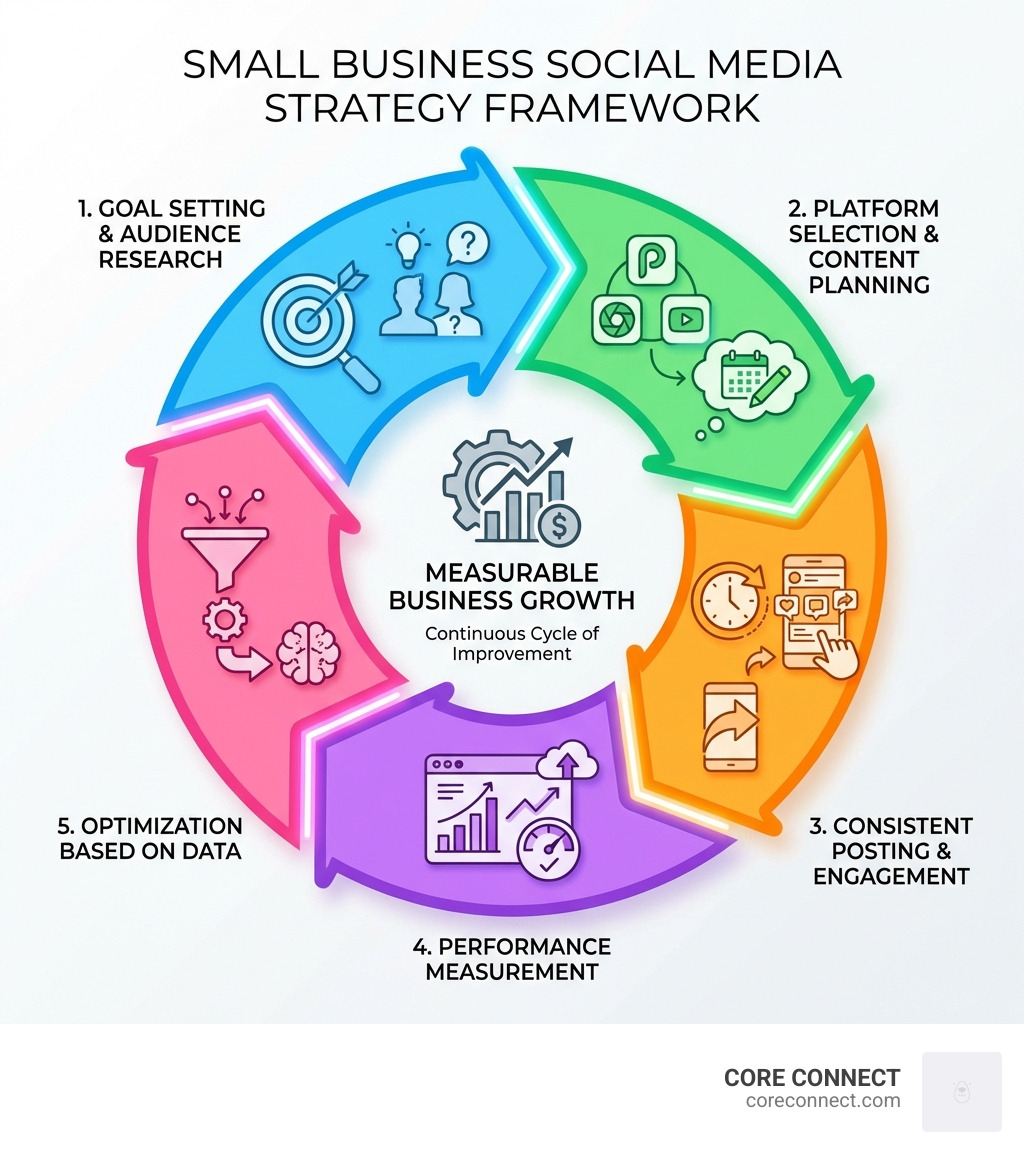
Why Small Business Social Media is a Growth Engine
For local businesses in Charleston, Mount Pleasant, and the Lowcountry, social media isn’t just a place to post photos of office dogs (though we do love a good Golden Retriever in a bowtie). It is a powerful engine for brand recognition and customer loyalty. When you consider that 5.24 billion people are now active on these platforms, the scale of opportunity is staggering.
But why is it specifically essential for the smaller players?
First, it’s about cost-effective marketing. Unlike traditional billboards or radio spots that cast a wide, expensive net, small business social media allows us to whisper directly into the ears of our ideal neighbors. You can reach a highly targeted audience for a fraction of the cost of traditional media. If you want to dive deeper into how this fits your overall plan, check out our social media marketing services.
Second, it drives sales conversion. Research shows that 67% of social media users have used social platforms to make a purchase. By maintaining a consistent presence, we aren’t just “staying relevant”—we are building the “know, like, and trust” factor that leads to a transaction.
Finally, social media provides market insights. It’s a giant focus group. By watching which posts get shared and which comments get typed, we gain a competitive advantage. We learn what our Lowcountry customers actually care about, allowing us to pivot our offerings faster than the big-box competitors ever could.
Building Your Small Business Social Media Strategy
A common mistake we see is “random acts of social media.” This is when a business owner posts three times in one day because they felt inspired, and then disappears for three weeks. To win, we need a strategy built on SMART goals (Specific, Measurable, Achievable, Relevant, and Time-bound).
Instead of saying “I want more followers,” try “I want to increase website traffic from Instagram by 15% over the next 90 days.” This gives us a target to aim for.
Understanding Your Audience
You cannot be everything to everyone. We must research your social media target audience to understand their habits. Are they scrolling LinkedIn during their lunch break in Mount Pleasant, or are they watching TikTok recipes at 10:00 PM?
| Platform | Primary Demographics | Best Use Case for Small Business |
|---|---|---|
| Ages 25–65+; 3B+ Users | Local community building, events, and reviews. | |
| Ages 18–34; 2B+ Users | Visual storytelling, product showcases, and influencers. | |
| Professionals; 900M Users | B2B networking, recruiting, and thought leadership. | |
| TikTok | Ages 13–34; 1.8B Users | Viral trends, “behind-the-scenes,” and raw authenticity. |
Choosing the Right Small Business Social Media Platforms
One of the most frequent questions we get is, “Do I need to be on every platform?” The short answer: Absolutely not. In fact, trying to manage five platforms poorly is worse than managing one platform exceptionally well.
When looking at demographics, align your choice with your business type:
- B2C (Business to Consumer): If you run a boutique in downtown Charleston or a landscaping company in Mount Pleasant, Facebook and Instagram are your bread and butter. Visuals of your work or products tell the story better than words ever could.
- B2B (Business to Business): If you provide software or consulting, LinkedIn is where your decision-makers live.
Resource Allocation is key. If you are a team of one, pick one platform and master it. As you grow, you can expand. 90% of people on Instagram follow a business account—the audience is there, you just have to show up where they are.
Creating a Content Plan and Calendar
Consistency is the secret sauce of the algorithm. To keep your sanity, you need a content calendar. We recommend using a simple template to map out your month in advance.
The Content Mix
A healthy small business social media feed follows the 80/20 rule: 80% of your content should provide value (education, entertainment, or inspiration), and only 20% should be a direct sales pitch.
How often should you post? This article suggests that quality beats quantity, but a general rule is 3–5 times per week for most platforms.
Visual Storytelling
We live in a visual world. You don’t need a professional photographer for every post, but you do need high-quality imagery. Tools like Canva make it easy for non-designers to create stunning graphics. Combine this with scheduling tools like Buffer or Hootsuite to automate your posting so you can get back to running your business.
Best Practices for Engagement and Authenticity

Social media is a two-way street—it’s a dialogue, not a monologue. If you just broadcast and never listen, you’re missing the “social” part of social media.
Real-Time Interaction and Outbound Engagement
When someone comments on your post, reply! It sounds simple, but 80% of consumers are more likely to buy from a brand after a positive social media interaction.
Don’t just wait for people to come to you. Engage in outbound engagement by commenting on posts from other local Charleston businesses or community groups. This builds visibility without spending a dime on ads.
Leveraging User-Generated Content (UGC)
Your customers are your best marketers. Encourage them to tag you in their photos. Reposting a customer’s story of them enjoying your service builds more trust than any ad ever could. It’s authentic, raw, and highly effective.
Customer Service and Crisis Management
The majority of people ages 18-54 see social media as an effective channel for customer service. Whether it’s a question about your hours or a complaint about a late delivery, responding publicly (and professionally) shows the community that you care.
If a crisis hits—like a negative viral review—don’t delete the comment. Acknowledge it, stay calm, and take the conversation to a private message. Transparency wins every time.
Measuring and Optimizing Your Performance
How do you know if your small business social media efforts are actually working? You have to move beyond “vanity metrics” like likes and look at Key Performance Indicators (KPIs) that impact your bottom line.
Tracking the Numbers That Matter
While a “like” feels good, a “click” to your website is better. We look for:
- Engagement Rate: Are people actually talking back?
- Click-Through Rate (CTR): Are they moving from social media to your site?
- Conversion Rate: Are those visitors turning into leads?
Businesses investing in social media marketing see an average return of $2.80 for every dollar spent. To ensure you’re on the right side of that stat, use native analytics tools like Facebook Insights or Instagram Insights to see which posts are driving the most action.
The CORE CONNECT Advantage: Reveal Marketing Hub
At CORE CONNECT, we believe in “clarity and control.” Using our Reveal Marketing Hub, we can see exactly how your social media efforts tie into your CRM and sales pipeline. We don’t just guess that a post worked; our visitor identification technology exposes who is visiting your site after seeing your social content. This level of insight allows us to perform A/B testing on your content and ads to see what truly resonates with the Lowcountry market.
Social media doesn’t exist in a vacuum. It should work hand-in-hand with your search visibility. For more on that, see our SEO services.
Frequently Asked Questions about Small Business Social Media
What are the typical costs for social media marketing?
Budgeting for small business social media can vary wildly depending on your goals. Most small to midsize businesses typically spend between $500 and $5,000 per month on social media marketing, which often includes a mix of content creation, management, and advertising spend.
If you’re doing it in-house, your primary cost is time. If you’re outsourcing, you’re paying for expertise and results. We often suggest starting with a modest ad budget—even $10 a day—to “boost” your best-performing organic posts to reach a wider local audience.
How can I maintain authenticity on social media?
Authenticity is your superpower as a small business. You aren’t a faceless corporation; you are a neighbor.
- Show the “Behind-the-Scenes”: People love seeing how the “sausage is made.” Show your team at work, your messy desk, or your morning coffee run.
- Employee Advocacy: Let your team post. Their personal touch is often more relatable than the official brand account.
- Own Your Personality: If your brand is funny, be funny. If it’s serious and academic, stay true to that.
What common mistakes should small businesses avoid?
- Chasing Vanity Metrics: 10,000 followers who live in another country won’t help your Mount Pleasant business. Focus on local, engaged followers.
- Over-Promotion: If every post is “Buy Now!”, people will tune you out. Provide value first.
- Inconsistency: Posting once a month is like opening your store once a month—nobody will know when to expect you.
- Ignoring Feedback: Social media is a conversation. If you don’t respond to messages, you’re leaving money on the table.
- Using Unlicensed Images: Always ensure you have the rights to the photos you use. This article is a great resource for finding legal, free photos.
Conclusion
Mastering small business social media isn’t about being a tech wizard or having a million-dollar production budget. It’s about strategic growth, unwavering consistency, and making data-driven decisions.
In a competitive market like Charleston, you need more than just a presence—you need a system. Whether you want a fully managed, “done-for-you” social media strategy or you’re looking for the professional-grade tools within our Reveal Marketing Hub to run it in-house, we are here to help you scale with clarity.
Stop guessing and start growing. For more information on how we can help you build a sustainable growth engine, explore our growth services. Let’s turn those scrolls into sales together.