
How to Design a Website That Actually Sells Stuff
The Core Principles of Conversion Focused Web Design
At its heart, conversion focused web design is about decision architecture. It is the science of guiding a visitor’s eyes and mind toward a single, logical next step. Many business owners in Charleston fall into the trap of “analysis paralysis”—a psychological phenomenon where providing too many choices actually prevents a person from making any choice at all.
Think of it like scrolling through a streaming service for an hour only to give up and turn off the TV. When your website has ten different menu items, three different pop-ups, and four competing buttons, your visitor’s brain simply shuts down.
To combat this, we utilize Hick’s Law, which states that the time it takes to make a decision increases logarithmically with the number and complexity of choices. In high-performance websites, we aim for a 1:1 attention ratio. This means if you want a visitor to book a consultation, every link that doesn’t lead to that booking is a potential leak in your sales funnel.
Scientific research shows that the human brain processes visuals up to 60,000 times faster than text. This is why clarity must always trump cleverness. If a visitor can’t understand what you do and how it helps them within five seconds of landing on your page, they will bounce. Our website design services focus on purpose-driven storytelling that aligns your business goals with the user’s immediate needs.
Building a Conversion-Focused Web Design Hierarchy
How a person reads a screen isn’t random. Nielsen Norman Group eye-tracking research has proven that users typically scan digital content in specific patterns.
- The F-Pattern: On text-heavy pages, users scan across the top, then a bit further down, and finally down the left side.
- The Z-Pattern: On pages with more visuals and less text, the eye moves from the top-left to the top-right, then down to the bottom-left, and finally across to the bottom-right.
A strategic conversion focused web design places the most critical information—your Unique Value Proposition (UVP) and your primary Call to Action (CTA)—exactly where these eye paths intersect.
Everything “above the fold” (the area visible without scrolling) must answer three questions:
- What do you offer?
- How does it make my life better?
- What do I do next?
By using scannable content blocks and clear H2 and H3 headings, we ensure that even the 79% of users who only skim your page can still digest your core message.
Using Psychology to Drive Action in Web Design
We don’t just design for screens; we design for the human subconscious. Most snap decisions are made by “System 1” thinking—the fast, instinctive, and emotional part of the brain. To trigger this system, we lean on proven psychological models like the Fogg Behavior Model, which suggests that behavior happens when Motivation, Ability, and a Prompt occur simultaneously.
We also utilize the Peak-End Rule in UX, which posits that people judge an experience based on how they felt at its peak and its end. In web design, this means making the value discovery (the peak) exciting and the checkout or form submission (the end) incredibly smooth and rewarding.
Other powerful triggers include:
- Loss Aversion: Framing an offer by what the customer stands to lose (e.g., “Stop wasting 10 hours a week on manual data entry”).
- Social Proof: Showing that others in the Lowcountry have already trusted and succeeded with you.
- Authority Bias: Displaying certifications or industry associations to build instant rapport.
Visual Elements That Guide the Charleston Buyer’s Journey
Visuals are the silent navigators of your website. We use elements like contrast, negative space (white space), and directional cues to pull the visitor’s attention exactly where it needs to go.
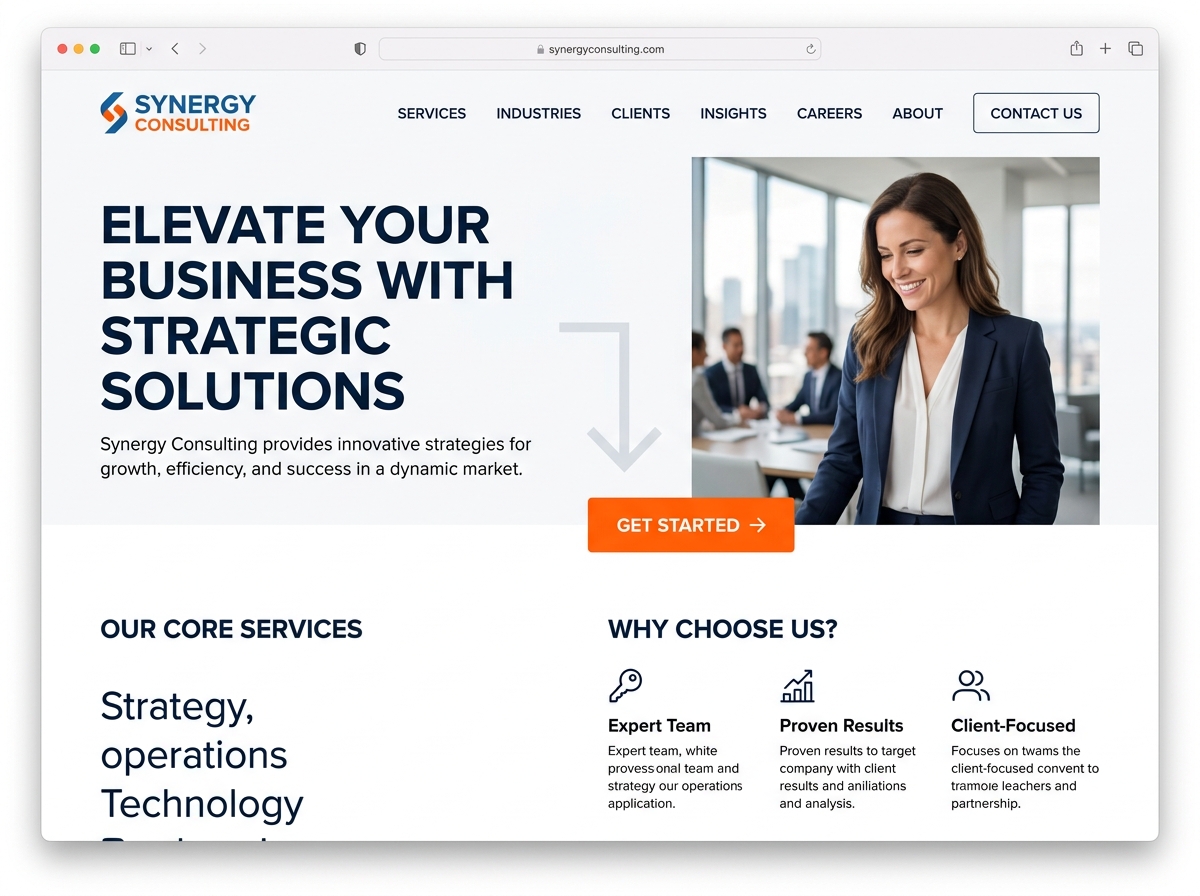
In a crowded market like Charleston real estate or professional services, your imagery needs to do more than just look “nice.” It needs to build an emotional bridge. For instance, using high-resolution photography of a person looking toward your contact form is a subtle but effective directional cue that naturally draws the visitor’s eyes to the button.
We often perform a “squint test” on our designs. If you squint your eyes until the text is blurry, can you still tell what the most important element on the page is? If the CTA button doesn’t pop out against the background, the design isn’t conversion-focused yet. This level of detail is what we integrate into our Reveal Marketing Hub systems to ensure every visitor is accounted for.
Crafting Compelling CTAs for Conversion-Focused Web Design
The Call to Action is the linchpin of your entire site. A weak “Submit” button won’t cut it in 2026. Effective CTAs use action-oriented verbs that promise a specific benefit.
Consider the difference in these real-world conversion lifts:
- Generic: “Start Free Trial”
- Conversion-Focused: “Start My 30-Day Free Trial” (A simple change from “your” to “my” has been shown to increase conversions by 90% in some case studies).
We prioritize a clear hierarchy between primary and secondary CTAs. Your primary button should be the boldest color on the page (contrast psychology), while secondary actions (like “Learn More”) should be less visually dominant to avoid distracting from the main goal.
Designing for Trust and Credibility
Trust is the currency of the internet. According to a Nielsen consumer trust study, 92% of consumers trust peer recommendations over any other form of advertising.
To build this trust, your conversion focused web design must include:
- Testimonials: Specifically those that include a photo, full name, and a specific result.
- Video Testimonials: These are processed faster and build deeper empathy than text alone.
- Social Proof Bars: Desaturated logos of local Charleston businesses you’ve worked with.
- Security Badges: Especially near forms or checkout areas to reduce “transactional friction.”
Technical Foundations: Speed, Mobile, and Performance
You could have the most persuasive copy in the world, but if your site takes four seconds to load, half of your visitors are already gone. Performance is a direct revenue driver.
| Factor | Impact on Conversion |
|---|---|
| Page Load Speed | A 0.1s improvement can boost conversions by 8% |
| Mobile Optimization | 53% of traffic is mobile; non-optimized sites lose leads instantly |
| Core Web Vitals | Google’s metrics for “visual stability” and “interactivity” |
| SSL/Security | Missing “HTTPS” triggers browser warnings that kill trust |
Google has made page speed a ranking factor, meaning slow sites don’t just convert poorly—they don’t even get found. Our SEO services prioritize technical health, including image compression and script minimization, to ensure your site meets Google’s Core Web Vitals.
Mobile Optimization for Conversion-Focused Web Design
With over 60% of visitors using mobile devices, a “responsive” site isn’t enough; it must be mobile-first. This means designing for the “thumb zone”—the area of the screen most easily reached when holding a phone with one hand.
For Charleston businesses targeting local users on the go, we implement:
- Single-column layouts for easy scrolling.
- Touch-friendly elements (buttons at least 44×44 pixels).
- Click-to-call buttons for immediate contact.
- Simplified navigation that doesn’t hide the most important links behind a confusing “hamburger” menu.
Common Design Mistakes That Kill Your Sales Funnel
We see the same “revenue leaks” over and over again. Identifying these is the first step toward a high-performing site.

- Overdesign: Using flashy animations or autoplay videos that distract from the message and slow down the site.
- Too Many CTAs: Asking the user to “Follow us on Instagram,” “Sign up for our newsletter,” and “Buy now” all at once.
- Form Friction: Asking for ten fields of information on the first interaction. Switching to a two-field or multi-step form can significantly increase completion rates.
- Generic Stock Photos: Using “handshake” or “headset lady” photos that feel fake. Real, human-centric imagery of your actual team or local Charleston landmarks builds far more rapport.
- Hidden Navigation: Making it a treasure hunt to find your pricing or contact page.
Frequently Asked Questions about Conversion Design
How does conversion design impact SEO?
While SEO focuses on getting people to your site, conversion design focuses on what they do on the site. However, they are deeply linked. Google tracks user signals like bounce rate and time-on-page. If your conversion focused web design keeps people engaged, Google sees your site as high-quality and rewards you with better rankings.
What is the ideal number of form fields for lead gen?
Generally, less is more. Research shows that reducing a form from six fields to three can increase conversions by nearly 50%. For more complex services, we recommend “progressive disclosure”—using a multi-step form that starts with easy questions (like a zip code or name) to build momentum before asking for more sensitive data.
How often should I A/B test my website design?
Testing should be a continuous process, not a one-time event. We recommend testing one major element at a time (like a headline or a button color) for at least two to four weeks to gather enough data to make an informed decision.
Conclusion: Turning Your Website into a Revenue Engine
At CORE CONNECT, we believe your website should be your most valuable asset, not a source of frustration. By moving away from fragmented tools and adopting an integrated digital ecosystem, you gain the clarity and control needed for long-term growth.
Whether you are a professional service provider in Mount Pleasant or a home services business in Summerville, our goal is to replace the chaos of disconnected marketing with a single, powerful operating system. By focusing on conversion focused web design, we ensure that your traffic translates into measurable ROI.
It’s time to stop guessing and start growing. Your business deserves a scalable, data-driven foundation that you own.
Schedule a Free Consultation Ready to turn your website into your best salesperson? Book a 30-minute discovery call to audit your current design and identify hidden revenue leaks. Book a 30-Minute Discovery Call Phone: +1 (843) 800-2026 Email: hello@coreconnect.com